Twelve Apostles: viewpoints, helicopter flight and the best time to visit
Updated October 28, 2026 · 6 min read

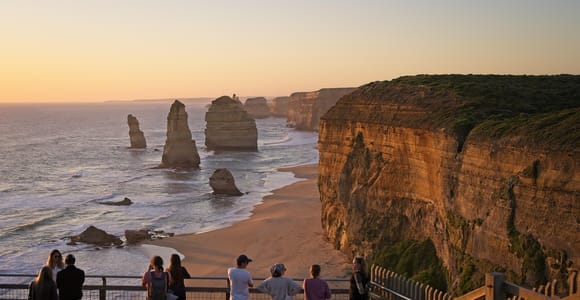
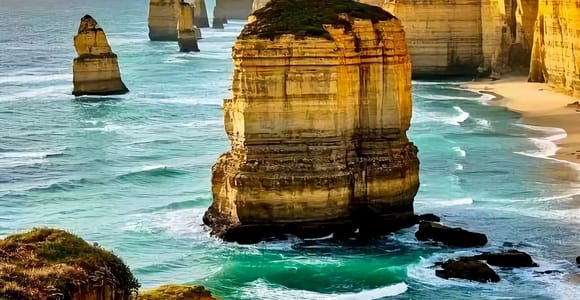
The Twelve Apostles are not twelve matching rocks arranged for one photograph. They are an eroding limestone coast, with seven of the original named stacks still standing and many other formations nearby. The best visit therefore combines the main platforms with enough time to notice the changing light and the scale of the cliffs. A rushed coach stop can show you the view; it cannot give you the coast to yourself.
Sunrise, daytime or sunset?
Official regional guidance recommends sunrise and sunset for dramatic light and early morning for the best chance of quieter platforms. Sunrise requires staying near Port Campbell or Princetown because the site is about 275 kilometres from Melbourne and roughly four hours away by the scenic road. It is the strongest option for photographers who can stay overnight.
Daytime gives the simplest logistics and clear visibility, but tour groups overlap. Wind, rain and cloud matter more than the clock: a bright midday can outperform a hidden sunset. Sunset adds warm side light when conditions cooperate, though it is popular and leaves independent drivers facing a long journey after dark.
What the main viewpoint actually involves
The visitor area has a large sealed car park and sealed routes to accessible boardwalks and viewing areas. The regional visitor site gives the walk as roughly 600 metres to 1.2 kilometres return and about 45 minutes. Stay behind barriers and on platforms because the cliff edge is unstable. Gibson Steps is a separate stop with stairs and is affected by tides and swell; it is not the accessible alternative to the main lookout.
Allow more than a quick photograph. Loch Ard Gorge, London Bridge and the Grotto are separate coastal formations, not angles of the same stack. Trying to fit all of them into a short stop means seeing the region through a bus window.
Is the helicopter worth it?
The classic Great Ocean Road tour with a helicopter option advertises up to 90 minutes at the Twelve Apostles and optional flights in summer. An aerial view reveals the line of cliffs and stacks in a way the land platforms cannot. It also costs extra, uses part of your stop and depends on operating conditions.
Choose it when flight is a central experience, not as insurance against a mediocre ground visit. Check the current supplement, flight length, cancellation handling and whether enough time remains for the platforms. No operator can promise flying weather on an exposed ocean coast.
Coming from Melbourne in one day
A day tour removes the driving but compresses the light, coast and forest into a 12- to 14-hour schedule. A sunset-oriented tour can improve timing but returns late. A reverse itinerary may reach the limestone coast before the main westbound coaches. Neither changes the distance.
For an independent day, decide whether the Great Ocean Road itself or the Twelve Apostles are the priority. Driving the inland route one way saves time; following every coastal bend both ways does not. Check official road and park notices before departure, especially after severe weather.
The best choice
Stay overnight and visit early if light, quiet and walking matter most. Take a standard day tour if you have one free day and do not want the fatigue of driving. Choose a sunset tour for the chance of warmer light, not a guarantee. Add the helicopter only when the aerial coast justifies the separate cost for you.
The honest best time is the first calm, clear window you can reach without rushing. Weather changes quickly here, while the platforms remain impressive even when the sky refuses to perform.