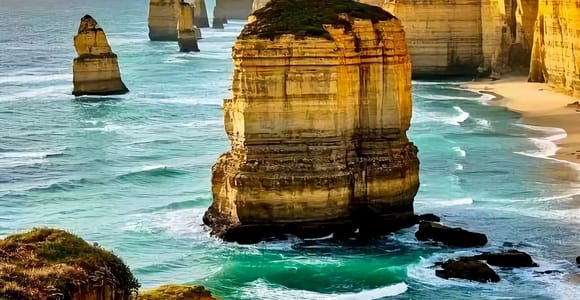
Great Ocean Road from Melbourne: day tour, reverse route or helicopter?
Updated October 28, 2026 · 7 min read

The difficult part of a Great Ocean Road day trip is not deciding whether the coast is worth seeing. It is choosing what to leave out. The Twelve Apostles are about 275 kilometres from Melbourne, and the scenic road passes beaches, forest and limestone cliffs before you even reach them. A full-day tour therefore lasts roughly 12 to 14 hours. If that sounds exhausting, stay overnight instead; the regional tourism board itself advises against racing out and back in one day.
The classic route: the broad first visit
The Great Ocean Road, Twelve Apostles and wildlife day trip is the clearest all-round choice. Its published itinerary combines wild koala and bird spotting, a rainforest walk, the Twelve Apostles and Loch Ard Gorge. It is also the most-reviewed Melbourne day trip on GetYourGuide, with 6,466 reviews in the current selection.
That breadth has a cost: each stop is necessarily timed. Choose it if you want one organised introduction and do not want to drive. Do not choose it if your main aim is a slow coastal walk, a long lunch in Apollo Bay or sunset photography.
Reverse route: useful, but not magic
Most classic coaches follow the coast west and return by the faster inland road. Reverse tours drive inland first, reach the limestone coast earlier and work back towards Melbourne. This can place you at the Twelve Apostles at a different time from the main flow. The boutique reverse tour limits its group to 12 people, while another reverse itinerary includes London Bridge among ten advertised stops.
“Reverse” does not mean empty. Independent drivers, other reverse tours and changing traffic still exist. Treat it as a different order with a reasonable chance of calmer stops, not a promise of solitude. It suits travellers who value a smaller group or who have already decided that the rock formations matter more than seeing the coastal road unfold in the conventional direction.
Where the helicopter fits
One classic-route tour advertises up to 90 minutes around the Twelve Apostles and an optional helicopter flight in summer. The flight is an add-on, not the core of the day. Check the price, operating conditions and time allowed on the booking page before paying; coastal weather can affect aviation, and the ground lookouts remain the part every visitor receives.
The helicopter makes most sense if the aerial view is itself a priority and you accept that it uses time within an already crowded itinerary. If you mainly want photographs from the official platforms, spend your budget on a smaller vehicle or an overnight stay instead.
What “best time” means on a day tour
Official local guidance favours sunrise and sunset for softer light and recommends early morning for fewer people. A Melbourne day tour cannot normally reach the coast at sunrise. Sunset departures exist, but they return very late and the result still depends on cloud. Reverse itineraries seek a quieter part of the day rather than the best light in every season.
Stay on the viewing platforms: the cliffs are unstable. Conditions and road access can also change after severe weather, so check the official road and park notices if travelling independently.
Which option should you book?
For most first-time visitors without a car, the broad wildlife-and-coast day trip is the sensible compromise: it covers the famous formations and gives the long coach day some variety. Pick a reverse small-group tour when crowd timing and a quieter vehicle matter more than price. Pick the helicopter option only when flying above the coast is a goal in its own right.
Whichever version you choose, bring layers, water and patience. Melbourne may feel mild in the morning while the exposed Southern Ocean coast is windy and cold. The honest trade-off is simple: a day tour lets you see a remarkable coast without driving, but it gives you a schedule rather than freedom.